I lost myself…
For eight years, I searched for something I couldn’t quite name.
Leonie.e.Brown
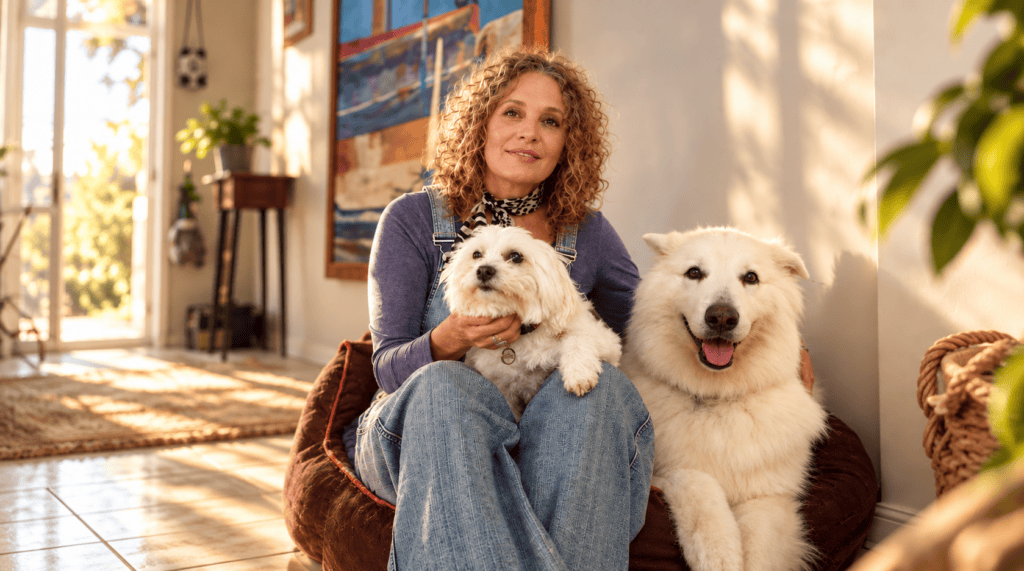
For eight years, I searched for something I couldn’t quite name.
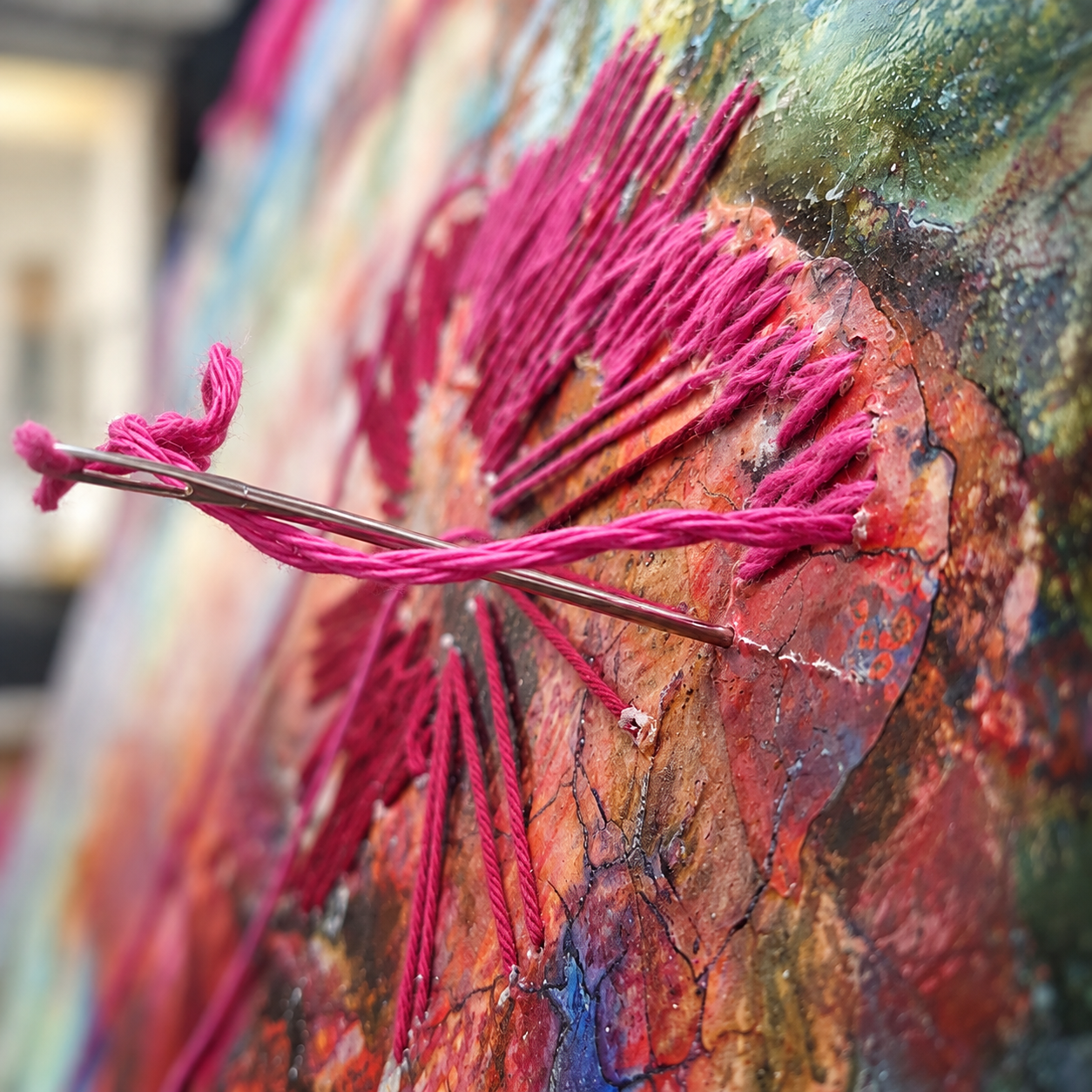
I kept painting. I kept experimenting. I tried new materials, new techniques, new ways of putting the pieces together.
What happens when you loosen your grip?
Then, a few months ago, something shifted.
But somewhere along the way, I had lost my footing. I couldn’t quite find my way back to the place where painting felt natural, where I could lose myself in the process and trust what was unfolding on the canvas.
I put down the needle and thread, returned to my oil paints and cold wax, and felt a familiar joy begin to stir.
For me, one of the greatest challenges in the studio has always been learning when to stop controlling the painting.
Fear has a way of sneaking into the creative process. It can show up as overthinking, as the need to make every mark count, as a reluctance to risk ruining something that is already working.
And suddenly, the painting becomes a problem to solve rather than an experience to enter. My years of experimentation forced me to work differently.
Every thread I pulled, every layer of wax I scraped away, every unfamiliar material I introduced asked me to let go of what I already knew.
I had to become comfortable with uncertainty. I had to allow things to go wrong. I had to discover that a painting could change direction without the entire process being a failure.
What felt like failure at the time was, in many ways, a loosening of fear.
The conversation that held up a mirror
A few months ago, I had an honest conversation with a long-time client in Germany.
He had followed my work for years, and he was candid about my more recent thread and fibre pieces. He simply didn’t connect with them.
I appreciated his honesty. And his words stayed with me.
Not because I suddenly decided that the work was wrong, or that I needed everyone to like what I made. Art doesn’t work that way.
But his response gave me a reason to ask myself a question I had perhaps been avoiding.
He had followed my work for years, and he was candid about my more recent thread and fibre pieces. He simply didn’t connect with them.
Heiko – Germany
A three-metre abstract painting for a remarkable entrance hall
As I settled back into oil and cold wax, an exciting commission arrived.
A client in Clara Anna Fontein had recently built a beautiful home with a spectacular three-storey entrance hall. The space called for a substantial artwork, something with presence, warmth, and enough visual depth to hold its own within the architecture.
We began discussing a painting on a monumental scale: three metres of canvas.
I love working large, but a painting of this size asks something different of you.
You cannot simply stand in one place and work your way around the composition. Your whole body becomes involved. You move back to take in the larger structure, then step forward to work on a particular area. You have to consider how individual marks relate to the entire surface, even when you can only see a small section at a time.
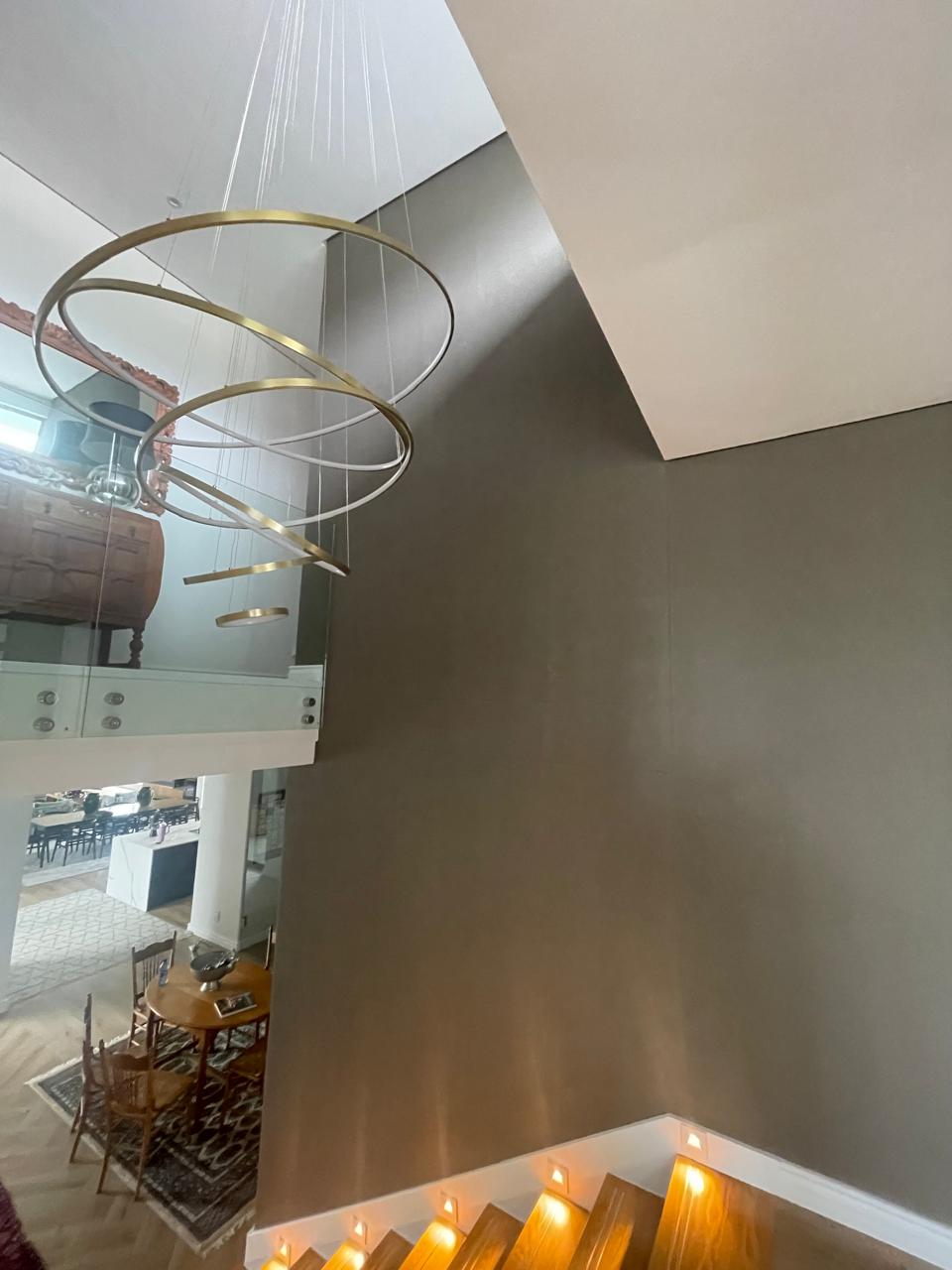
A large abstract painting also has a different relationship with the space around it.
In a soaring entrance hall, it becomes more than something to glance at as you pass. It can establish the atmosphere of the home, draw the eye upward, and create a point of connection between the architecture and the people who live there.
This commission is particularly meaningful because the painting will tell a story.
Not a literal portrait or a chronological illustration, but an abstract interpretation of a life lived over eight decades and beyond. A life is never simply a sequence of separate events. Everything overlaps. An earlier experience can change the meaning of something that happens decades later. Memories fade, while certain moments remain vivid. We carry parts of our past into the present, often without even realising it.
A layered painting can hold that complexity.
A translucent passage allows something beneath it to remain visible. A scraped surface reveals traces of what came before. A new colour can alter the feeling of an entire section without completely concealing the layers underneath.
The painting becomes a whole made from many different parts.
Perhaps that is why this commission feels particularly close to me at this point in my own life. I have been thinking a great deal about the way we carry our experiences, how we change, and how the different versions of ourselves eventually become part of the same story.
Leonie.e.Brown


About the Artist
Leonie.e.Brown is a South African artist whose canvases weave oil paint and embroidery into living stories. Inspired by the feminine experience, nature, and unseen emotions, her work balances fragility with resilience — inviting viewers into a dialogue between strength and softness.

