Threads of Life
Life, much like canvas,
sometimes Tears
It breaks, it scars, it frays at the edges
“So, I picked up a needle.”
At first, it was a spontaneous impulse, almost playful. But soon, it became clear that stitching was more than artistic whimsy, it was a metaphor, a way to weave trauma, memory, and resilience into something tangible and beautiful.

So, I picked up a needle
when thread meets paint
Embroidery on canvas painting is not something you expect to find in a traditional gallery. Paint, sure. Texture, yes. But thread stitched into the surface of a painting?
That’s where curiosity turns into fascination.
I started experimenting with this idea because paint alone wasn’t enough. Oil and cold wax have depth, but I wanted another kind of scar, another kind of healing line. Something tactile, intimate, almost bodily. A thick needle punching through canvas is not delicate—it’s forceful, intentional. The thread doesn’t just decorate. It sutures. It binds. It scars. It mends
For me, stitching became a way to layer stories onto my abstract paintings. Every pull of thread is a memory line. Every knot is a pause in the story. It’s painting, yes, but also writing, stitching, holding together fragments of experience.
the symbolism of stitching
It’s about human experience.
We stitch wounds. We stitch clothes. We stitch stories together when our lives fall apart. Embroidery on canvas painting carries this symbolic weight into the artwork itself.
I’m not doing embroidery for pretty decoration—it’s not about flowers on a pillowcase. It’s about human experience. Trauma. Recovery. Connection.
When a thread pierces canvas, it feels like repairing something that’s been torn. It’s both violent and healing. There’s tension in that contradiction, and it’s exactly the tension I want viewers to feel.
The act of stitching is repetitive, almost meditative. It becomes a ritual. A way of processing what cannot be spoken. That’s why many trauma survivors and creatives resonate with these works. The thread becomes visible proof of healing—healing that is messy, imperfect, but still deeply beautiful.

Let’s talk technique, because people always ask.
I work on oil and cold wax abstract paintings, which already have layers of texture. Once the painting reaches a certain stage, I puncture the surface with either a thick embroidery needle or a traditional punch needle.
Threads are pulled through carefully, sometimes tightly to create tension, sometimes loosely to allow movement. The color of thread matters—sometimes it echoes the paint beneath, sometimes it cuts through it like a wound.
The stitched areas aren’t random. They’re chosen places where I feel the painting needs a scar, a seam, or a thread to hold it together. The physical act of forcing thread through wax and paint is hard on the hands, but that labor is part of the meaning.
This isn’t embellishment. It’s excavation.

why thread instead of just more paint?
Because thread has a different voice.
Paint is fluid, soft, blending into itself. Thread is linear, physical, undeniable. It interrupts the flow. It makes you stop. Your eye follows it the way your finger traces a scar.
Embroidery on canvas painting adds texture that can’t be replicated with a brush. It projects from the surface, catching light differently, throwing tiny shadows. It shifts the way the painting behaves in a space.
Viewers often tell me they can’t resist touching the stitched sections—something they’d never dare with traditional paintings. That tactile pull is exactly the point. The work demands to be felt.
storytelling through materials
Wax is memory. Oil paint is emotion
Each material has its own symbolism. Wax is memory. Oil paint is emotion. Thread is healing. Together, they create layered narratives.
I often think of the paintings as skin. Skin that’s been marked, bruised, cut open, and stitched back together.
There’s beauty in survival. There’s resilience in scars.
When I explain this to viewers, I see recognition in their eyes. They know what it feels like to be torn and mended. That’s why this kind of work isn’t just for art lovers—it resonates with anyone who has lived through rupture and found a way back.

My fingers ache
It’s not always easy. The canvas resists. My fingers ache. Sometimes the thread breaks. But maybe that’s the point. Healing isn’t easy either.
I could just keep painting, but embroidery on canvas painting gives me something more. It feels like I’m writing secret letters to myself, sewn into the surface where they can’t be erased.
Every painting becomes not just an image, but a document of endurance. A witness. A stitched-together truth.
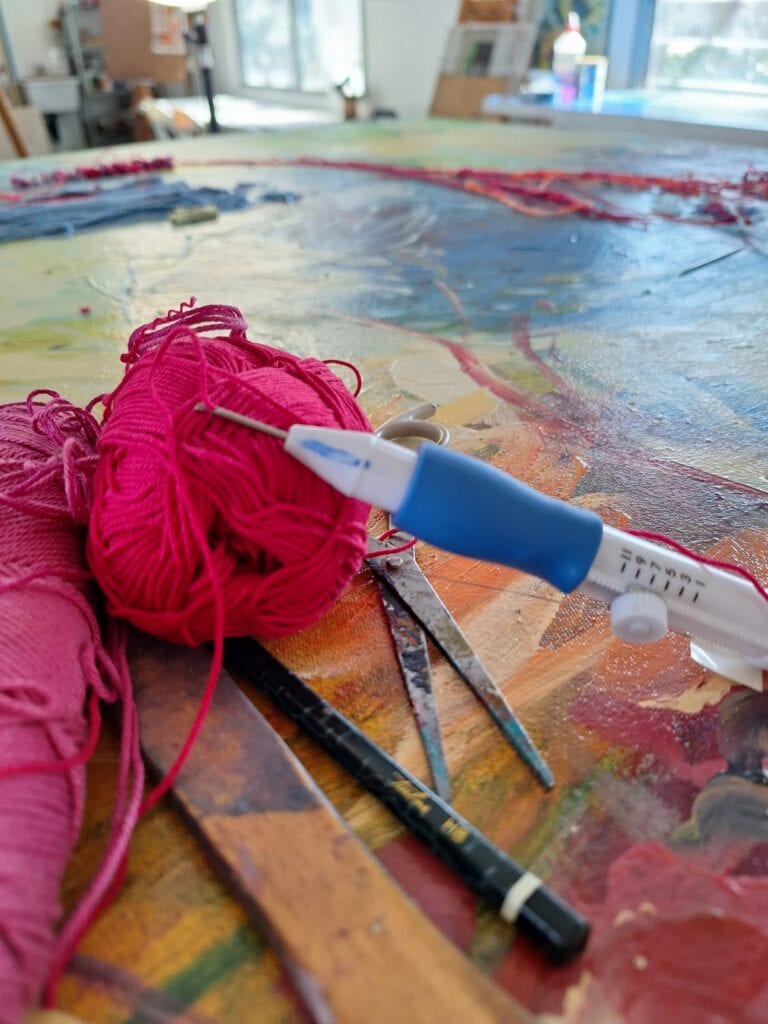
Art, like life, is never fully complete. We tear, we scar, we falter—but we also repair, reconnect, and transform
About me
Berlin-based gallerist Irina Rusinovich describes my work as “fearless and emotionally charged,” noting that my paintings “don’t just take up space physically, but energetically.” She recognizes my “bold and instinctive” use of color, praising how “reds, blues, and flashes of unexpected hues carry weight—they feel like emotion in motion.” My compositions, she observes, maintain “a sense of chaos being held just barely in balance,” while the “raw, tactile quality” of layered materials creates works that are “physical, almost sculptural.”
Each painting becomes a mirror, inviting viewers to find themselves within its translucent layers. My hope is that you don’t just see paint and materials—you see a reflection of your own journey, a visual prompt to explore the beautiful, intricate tapestry of your own life and the memories that make you, you.
Available for exhibitions, commissions, and gallery representation.
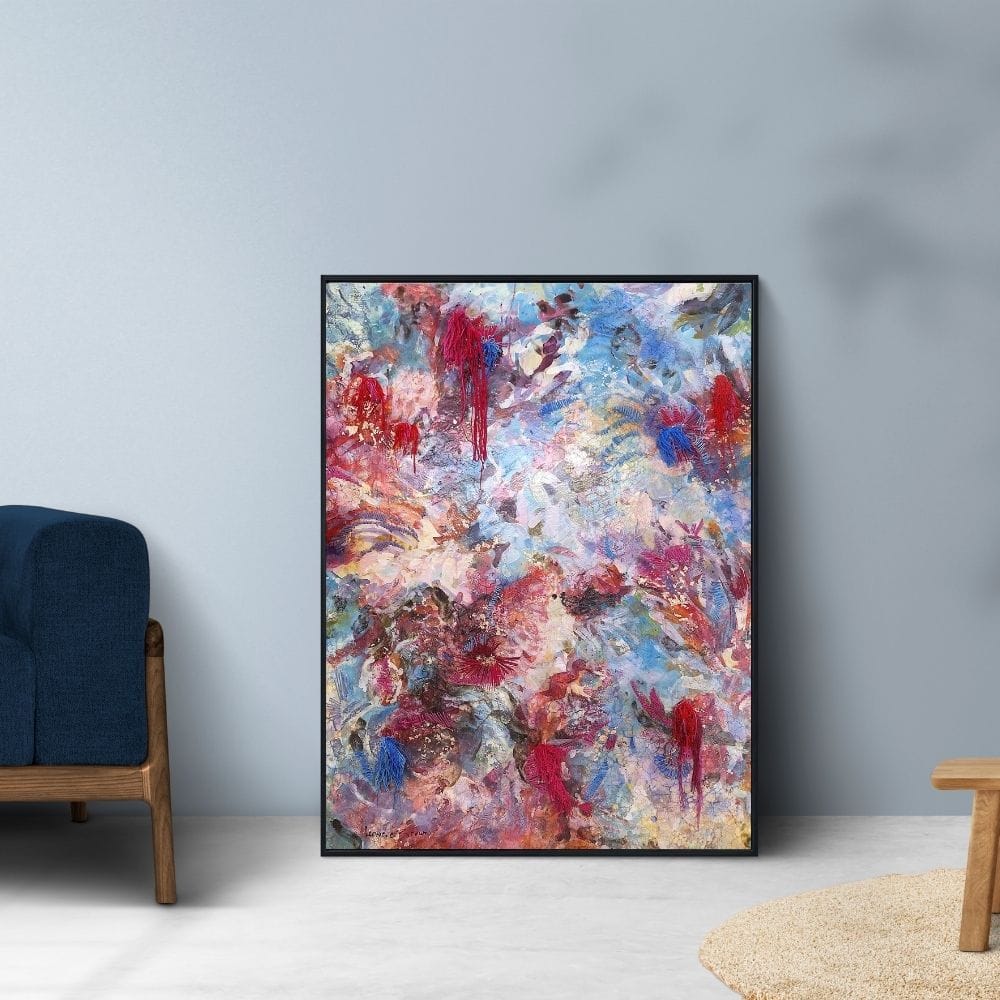
Unveil the Layers
Join the Leonie.e. Brown Community
Step beyond the surface of creation and into a world where art meets soul. As a valued member, you’ll receive:
Exclusive Studio Unfoldings
Peek behind the easel and witness the alchemy of encaustic and mixed media as new layers of meaning emerge.
